

Key Specifications
Description
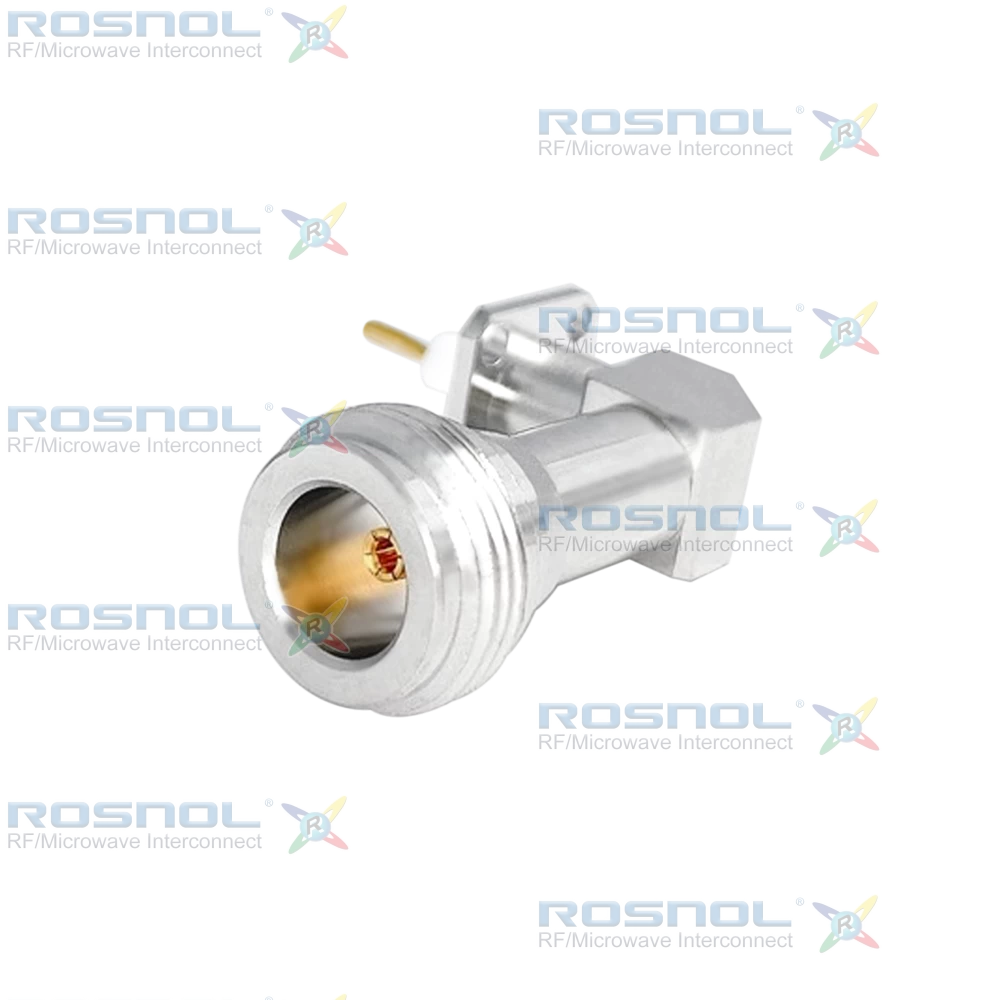
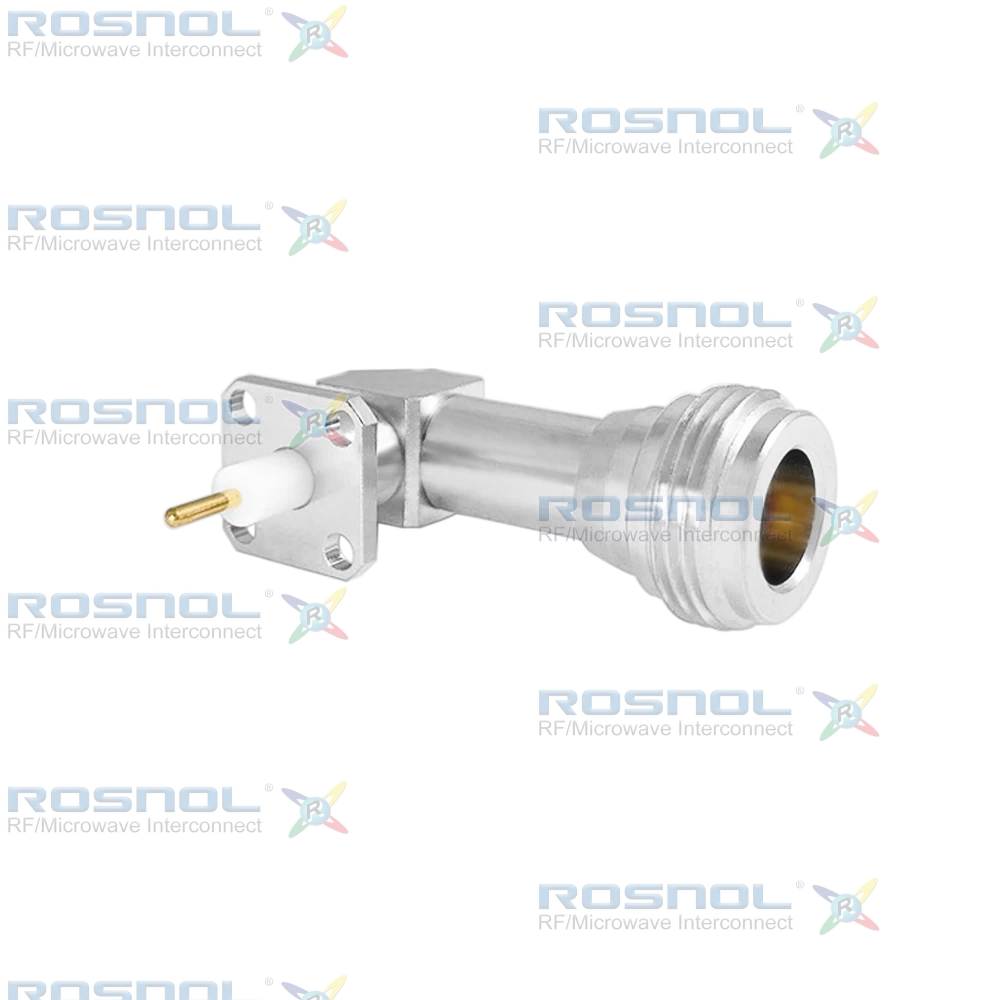
N Right-Angle Female Connector, 4 Hole Flange Mount, Solder cup, 8.64 mm Hole Spacing, 5 GHz, VSWR ≤ 1.12 Low PIM.
ROSNOL N2GFE59-3298B/90-LP is an N Jack (Female) Right Angle Low PIM RF Connector designed for wireless communication systems and high-performance RF infrastructure requiring low passive intermodulation characteristics. Featuring a 4-hole flange mount configuration with 8.64 mm hole spacing, this connector provides secure panel installation and consistent mechanical alignment. Designed with 50 Ω impedance and operating from DC to 5 GHz, it delivers outstanding electrical performance with VSWR ≤ 1.12, low insertion loss, and RF leakage of ≤128 dB up to 1 GHz. Its low PIM design supports signal integrity in modern RF networks where transmission quality is critical.
The connector incorporates a beryllium copper center contact with heavy gold plating and a non-magnetic underplating for excellent conductivity and long-term reliability. The silver-plated brass body enhances conductivity and corrosion resistance, while the PTFE insulator ensures stable dielectric performance. The center contact utilizes a solder attachment design, and the solder cup terminal structure provides secure electrical and mechanical cable termination. Additional features include a screw-lock coupling mechanism, 500 mating cycles minimum, center contact retention of ≥28 N, recommended torque of 0.7 to 1.1 Nm, and an operating temperature range of-65°C to +165°C.
This N Female Low PIM Connector is ideal for wireless infrastructure, distributed antenna systems (DAS), base station equipment, RF communication networks, antenna assemblies, and test environments. Its low VSWR, high-power handling capability, and Low PIM design make it an excellent solution for engineers seeking stable RF performance in demanding communication applications.