


Key Specifications
Description
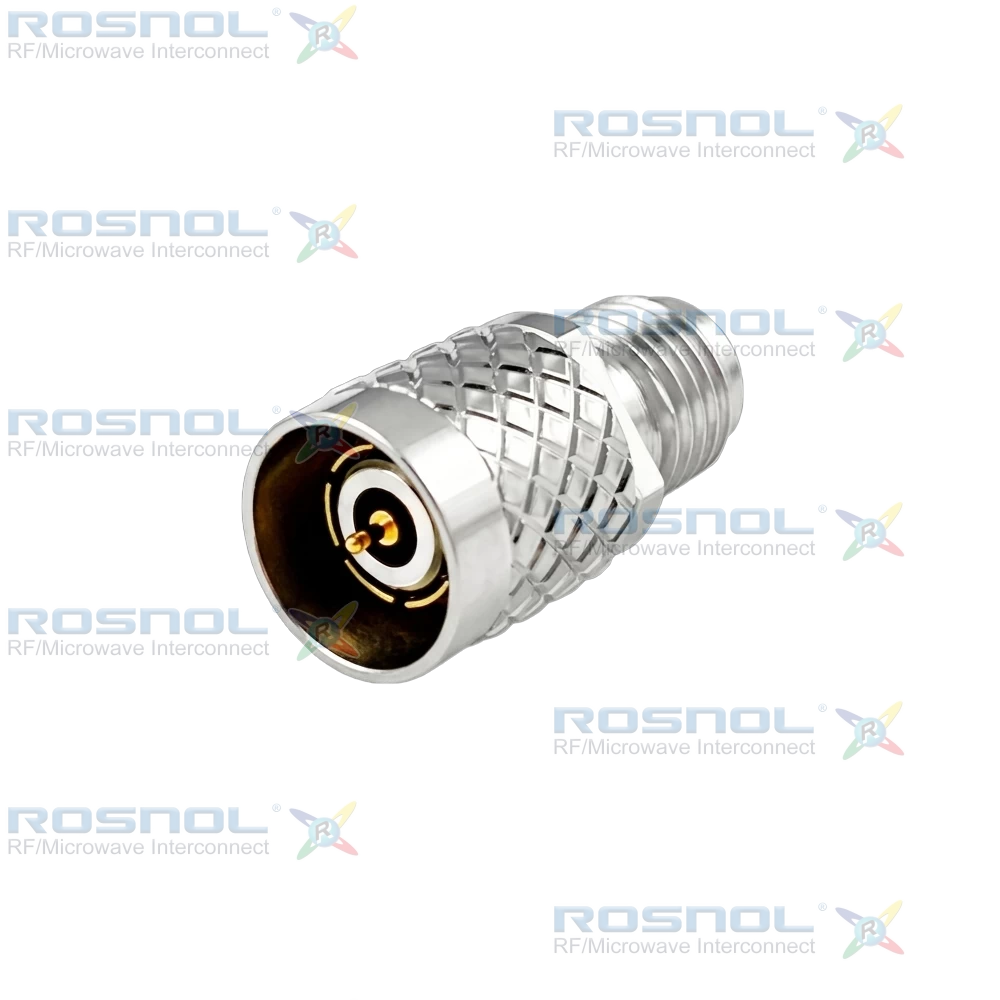
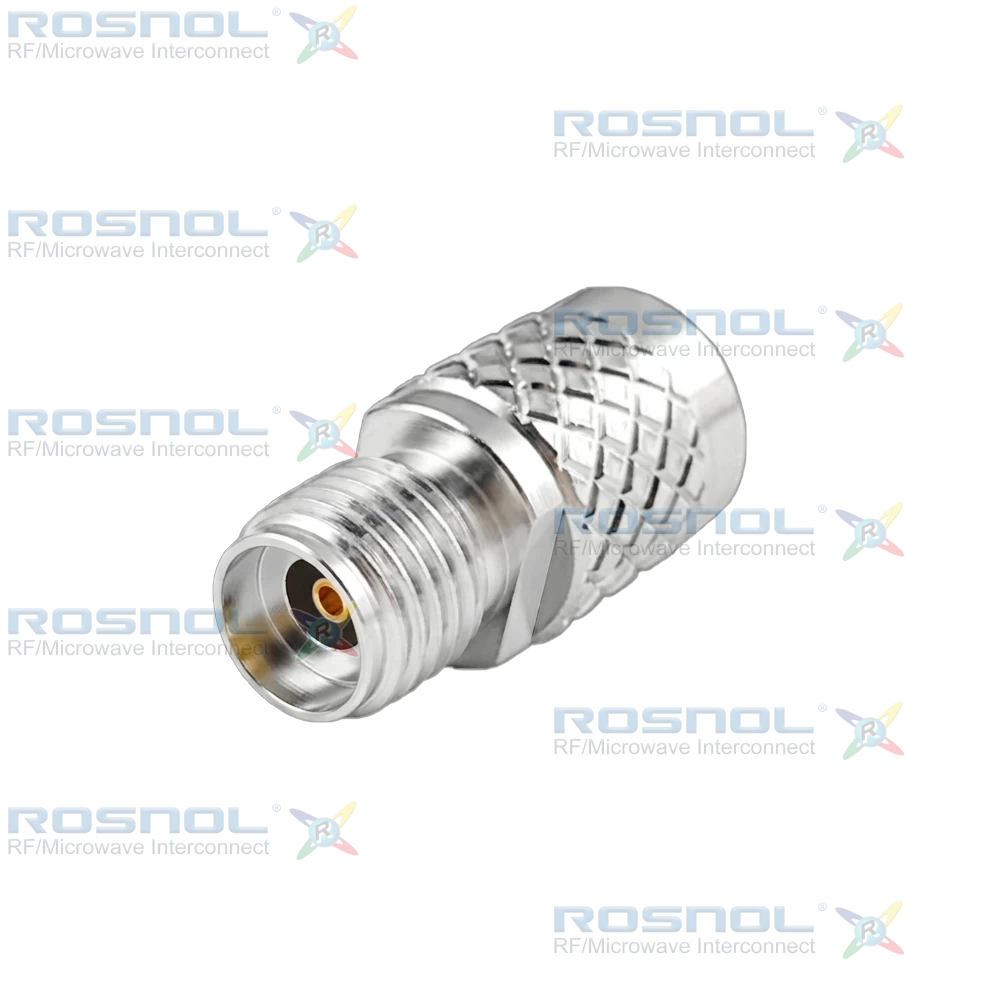
2.4mm Snap-On Male to 2.92mm Female Straight Adapter, DC-40 GHz, VSWR ≤ 1.15, 50 Ω Impedance.
ROSNOL AD-QQ1K25A/99X-9X is a high-performance straight RF adapter featuring a 2.4mm Snap-On male connector and 2.92mm female connector. Designed for 50Ω systems, it supports frequencies from DC to 40GHz with VSWR ≤1.15 and low insertion loss, making it suitable for precision microwave testing, RF instrumentation, communication infrastructure, and high-frequency measurement environments.
The adapter utilizes beryllium copper center contacts with gold plating over non-magnetic nickel-phosphorus underplating to ensure excellent conductivity and signal integrity. The 2.92mm side incorporates a passivated stainless-steel body, while the 2.4mm Snap-On interface uses a gold-plated beryllium copper body and a passivated stainless-steel coupling nut. PEI insulators support stable dielectric performance, with insulation resistance ≥5GΩ and RF leakage ≥100dB up to 1GHz.
Its combination of snap-lock and threaded interfaces provides fast connection while maintaining precise RF performance. With durability exceeding 500 mating cycles, the AD-QQ1K25A/99X-9X is ideal for network analyzers, microwave modules, laboratory instrumentation, calibration systems, and advanced RF test applications where low VSWR and reliable high-frequency transmission are critical.