


Key Specifications
Description
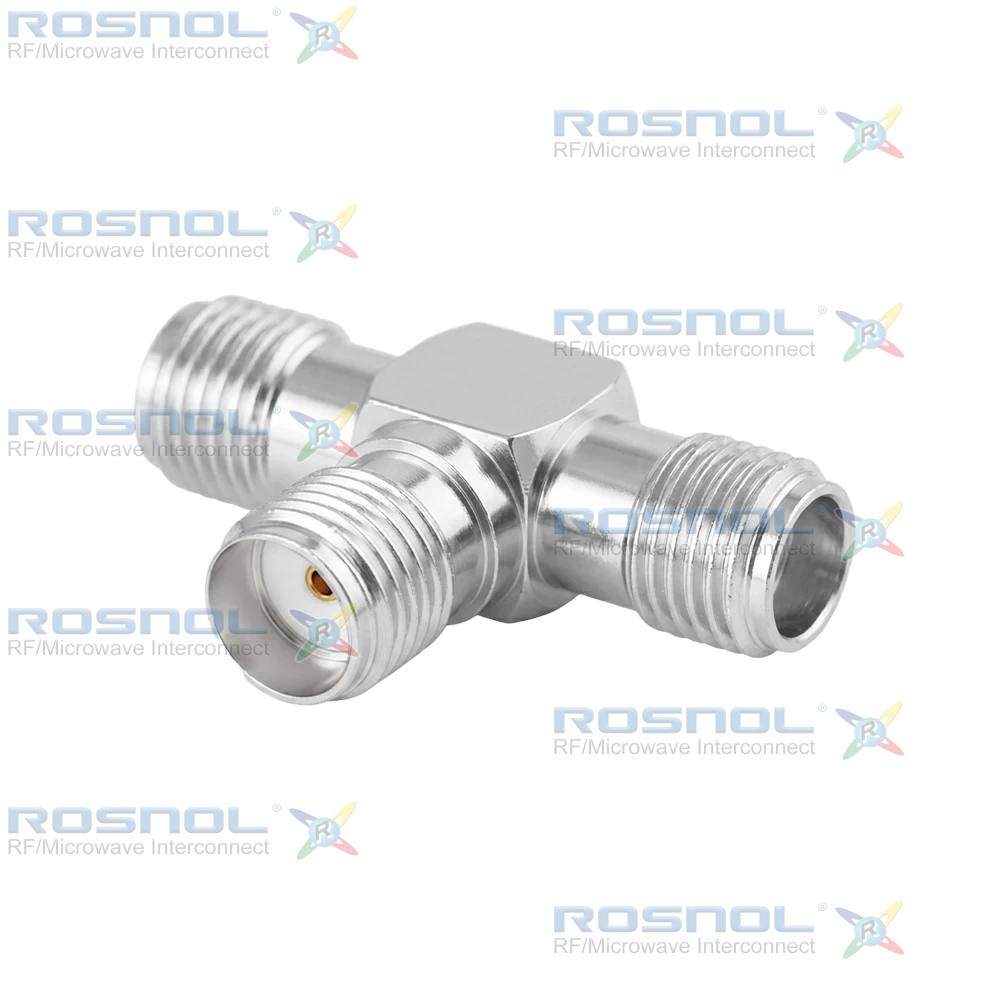
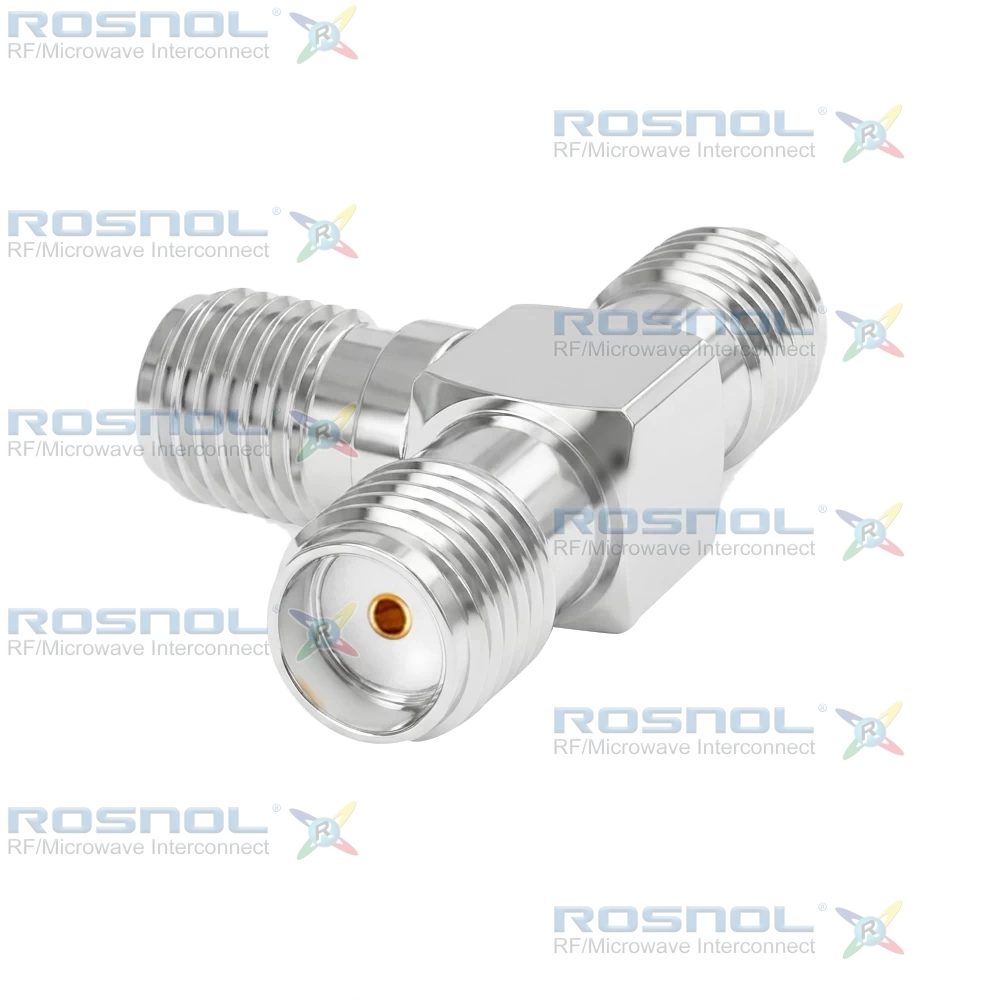
SMA Female to Female to Female T-Adapter, DC-12.4 GHz, 50 Ω Impedance.
ROSNOL ADT-A2A2A25A/9X-9X-9X is a precision SMA T-Adapter featuring three SMA Jack (Female) interfaces in a Female-Female-Female configuration. Designed for 50 Ω RF and microwave systems, it supports frequencies from DC to 12.4 GHz, making it suitable for signal distribution, network expansion, test systems, and high-frequency communication equipment.
This RF T-Adapter provides stable electrical performance with insulation resistance ≥ 5 GΩ, contact resistance as low as 3 mΩ, 1000 Vrms test voltage, 480 Vrms working voltage, power handling up to 200 W at 2 GHz, and RF leakage exceeding 100 dB. The center contacts are manufactured from beryllium copper with gold plating over non-magnetic nickel-phosphorus underplating. Passivated stainless-steel bodies combined with PTFE insulators deliver excellent corrosion resistance and long-term reliability.
Its precision-machined construction and screw-lock coupling system ensure dependable RF performance and mechanical durability. This SMA Female Jack T-Adapter is ideal for RF measurement systems, wireless infrastructure, microwave subsystems, antenna networks, and laboratory test environments requiring consistent 50 Ω signal transmission.