

Key Specifications
Description
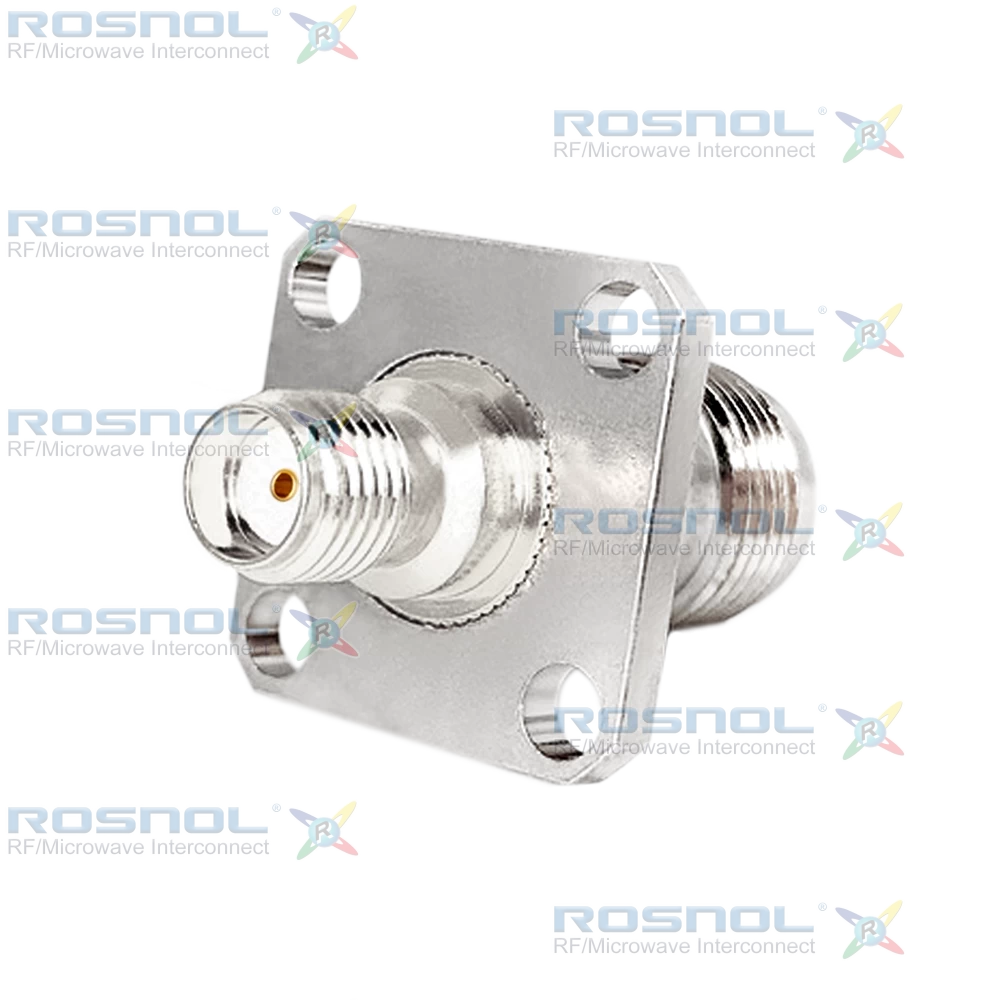
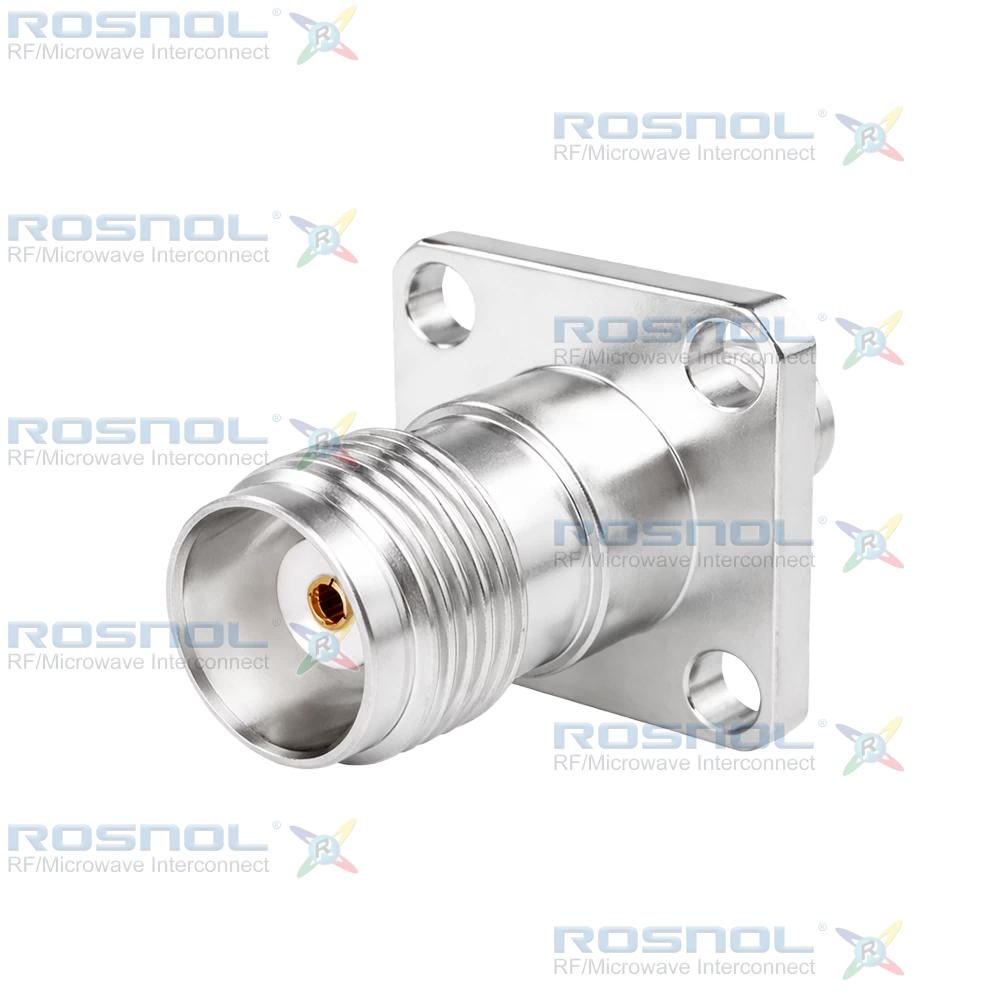
SMA Jack (Female) to TNC Jack (Female) Adapter | 4-Hole Flange Mount | Screw-Lock | Stainless Steel Body
The ROSNOL AD-A2T25A-PF/9X-9X is engineered for high-frequency applications requiring robust and reliable performance. With a 50-ohm impedance and DC to 11 GHz frequency range, it delivers VSWR ≤ 1.20 and insertion loss ≤ 0.04√F (GHz) dB. Electrical performance includes insulation resistance ≥ 5 GΩ, test voltage 1000 V rms, and RF leakage ≥ 100 dB up to 1 GHz. Mechanical reliability is guaranteed through screw-lock coupling, axial contact captivation ≥ 27 N, and ≥ 500 mating cycles, ensuring secure and repeatable connections.
Material construction features stainless steel bodies with passivated finish for corrosion resistance, beryllium copper contacts plated with gold over nickel-phosphorus underplating, and PTFE insulators for superior dielectric stability. This design ensures durability across a temperature range of -55°C to +155°C.
ROSNOL’s precision-engineered RF adapters deliver reliable performance across a wide range of RF and microwave systems. Designed to meet the stringent demands of high-frequency signal transmission, ROSNOL adapters offer a cost-effective alternative to products from leading European and American brands. All ROSNOL RF components are manufactured in ISO 9001-certified facilities and fully comply with RoHS and REACH regulations, ensuring global environmental and safety standards. Customization services for materials, plating, and mechanical design are available to support specialized interconnect requirements.